

Landing Zone
The best way to land safely on Google Cloud
Your first step towards the cloud. Take it on solid ground.
Our clients:







By building a Landing Zone with FOTC you can:

Move your organisation to Google Cloud quickly and efficiently

Take advantage of extensive tech support and consultations with our team

Financial support for the Landing Zone project

Carry out your project with the highest Google standards

Save your team's time and let them focus on creating products

Access our experts' knowledge and experience, confirmed by 35 Google Cloud certificates
What is Landing Zone?
Landing Zone is a cloud environment configuration recommended by Google Cloud experts. It’s designed to allow you to use Google Cloud safely. Landing Zone provides a standardised base for hosting workloads in the cloud and is dedicated to implementing best practices and security across projects and environments. It helps organisations take their first steps in Google Cloud, providing them with preconfigured assets and best practices.
The benefits of Landing Zone

Extended protection
Landing zone allows you to define security rules individually for each workload. You can use firewalls, bulk security rules and access control.

Cost efficiency
Assigning resources to a specific billing account allows you to monitor costs and manage them efficiently.

Efficient management
A comprehensive and flexible approach to data and resource protection is possible thanks to backup and disaster recovery functions.
Let's create a Landing Zone for your project together
Learn more about Landing zone
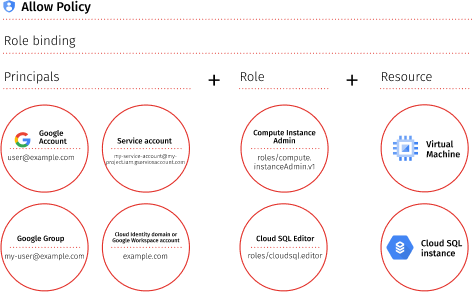
Identity and Access Management (IAM)
Take advantage of the granular IAM control. You can assign access at the individual asset level.
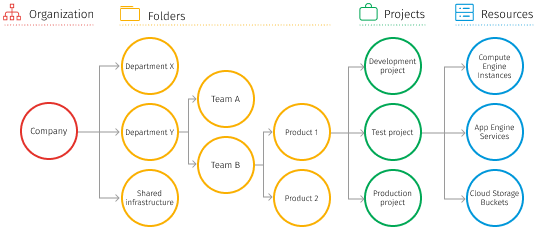
Cloud resources hierarchy
We create a resource hierarchy to provide the right hierarchy of ownership, which binds the lifecycle of a resource to its immediate parent, and to ensure attach points and inheritance for access control.
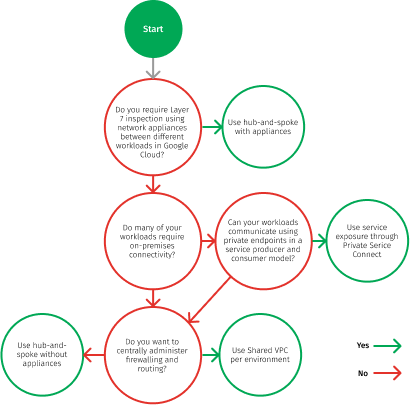
Network design
When creating a Landing zone, you need to choose the right design for the network based on whether you want centralised or decentralised control. You also need to decide on connectivity options (on-premise or hybrid), security requirements and scalability.
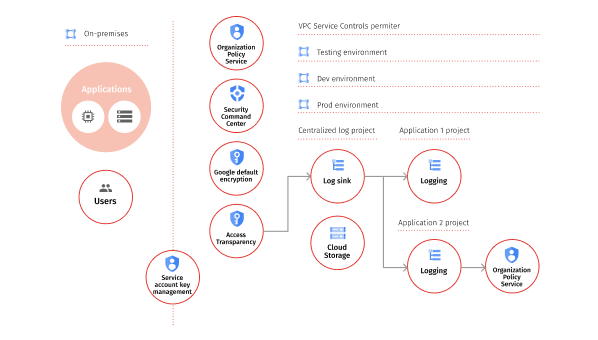
Security
While designing your Landing zone, you need to make a few key decisions about security, like the maximum number of private keys to service accounts, limits on data exfiltration through Google API interfaces and choosing how to monitor unsecured configurations.
Choose your Landing zone configuration

Manual installation
A manual installation of Google Cloud Landing zone is a good option for small teams and projects. It includes configuring the basic elements of a safe and scalable cloud environment.
 Flexibility: Manual installation allows for more flexibility in configuring a Landing zone because it is not limited by pre-defined templates and configurations. Granular control: In this version you have more control over the configuration of individual resources, tailoring them to your needs. Knowledge transfer: Your teams must understand the details of the configuration process and the basic cloud infrastructure. Costs: Contact us to get a quote on manual installation.
Infrastructure as Code (Terraform)
At FOTC we use Terraform to help you configure your Google Cloud.
Cohesion: You can standardise infrastructure configuration and make it available for all projects and environments, ensuring they remain cohesive and error free. Version control: You can control configuration version, which allows organisations to track changes in time and maintain change history. Automation: IaC allows you to automate infrastructure implementation and updates, limiting the risk of errors and ensuring effective operation. Scalability: Infrastructure as Code is easy to implement and manage on a large scale. It allows organisations to launch new environments and assets quickly and effectively. FAQ
Google Cloud Landing Zone is a set of pre-configured elements necessary to create a safe and efficient Google Cloud Platform (GCP) infrastructure.
The basic elements include: Identity provisioning, resource hierarchy, network and security control. Other important elements include monitoring and registering, creating back-ups and post-failure recovery, compliance, cost efficiency and cost-controlling measures, interface management through API and cluster management.